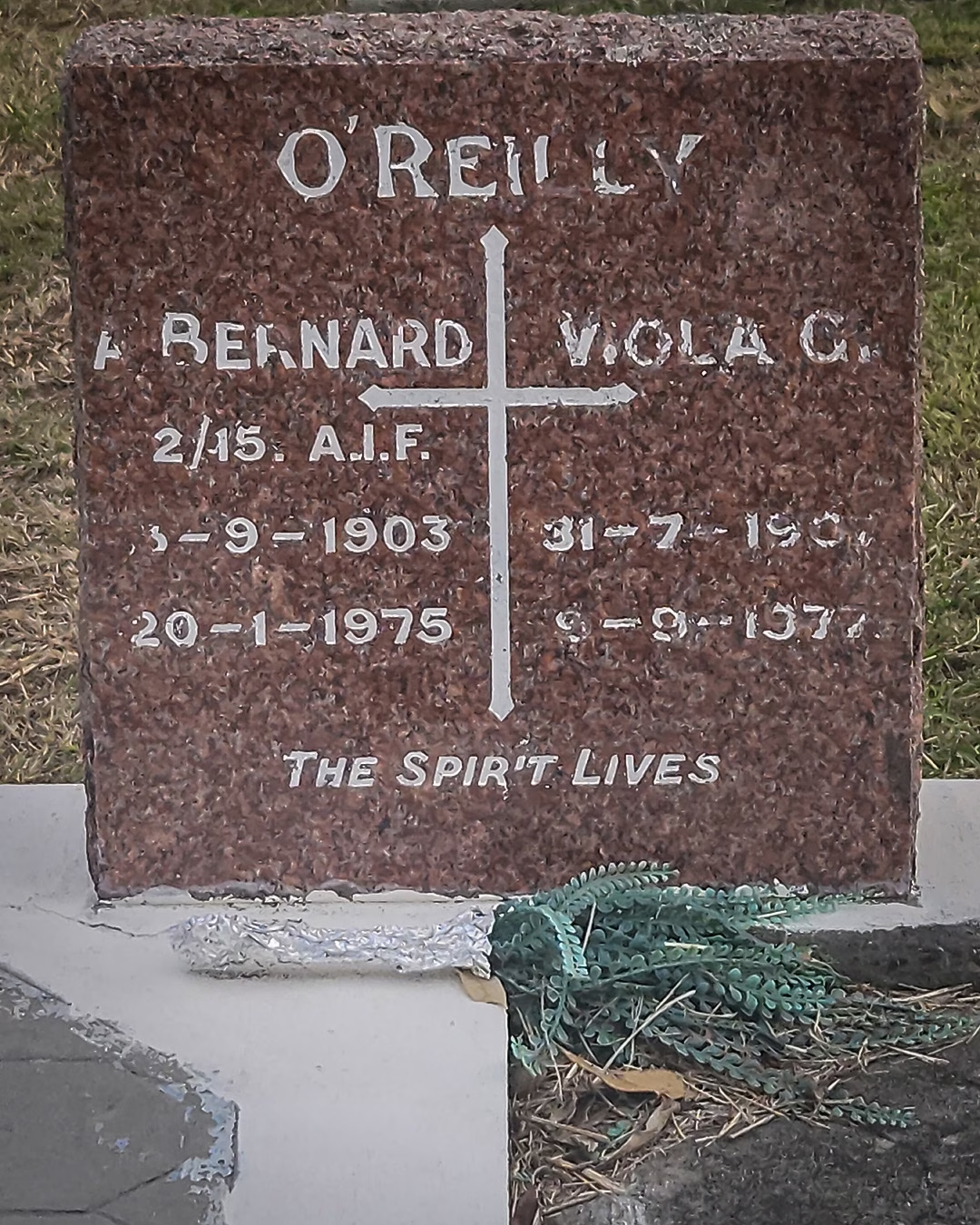
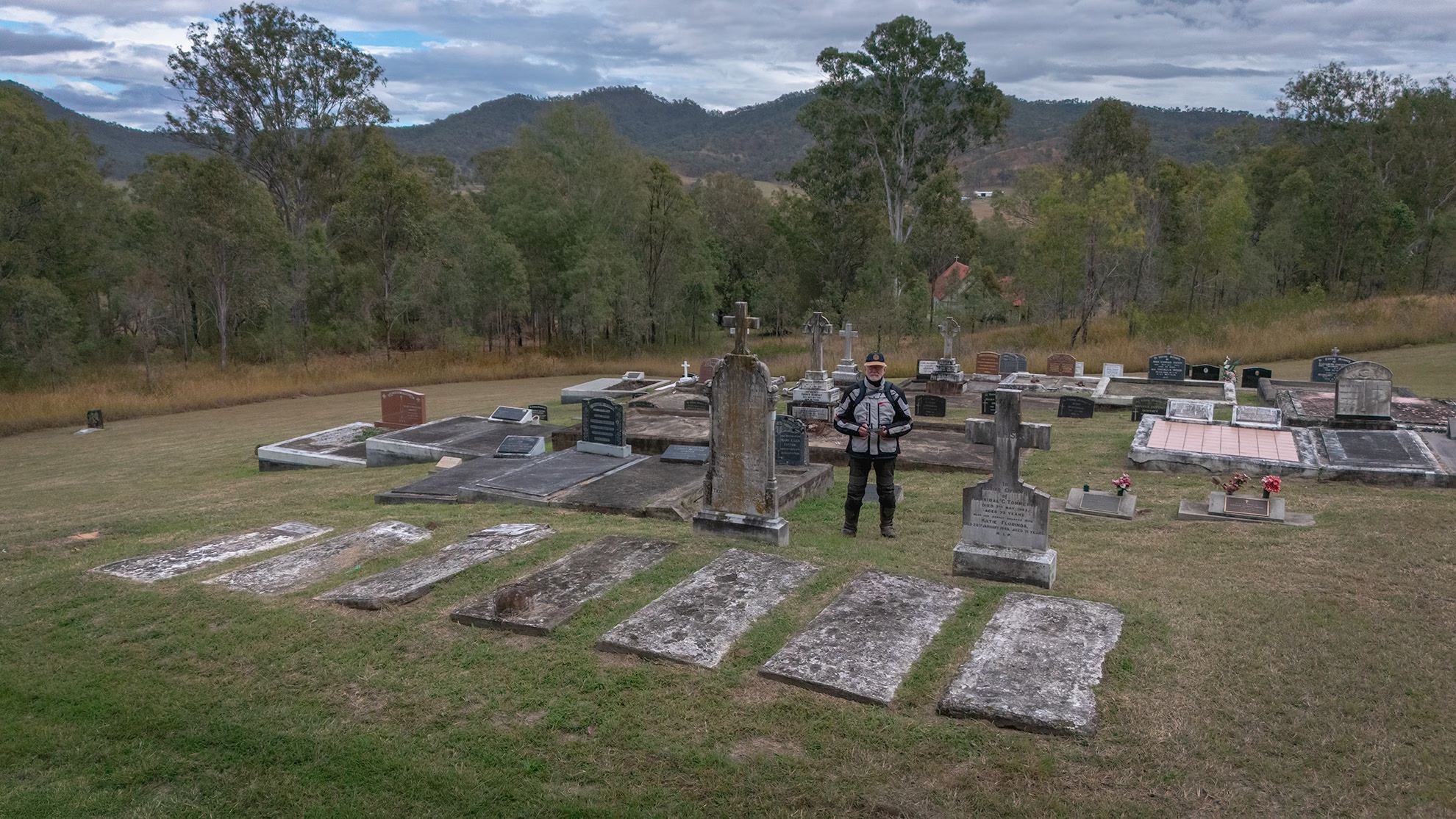
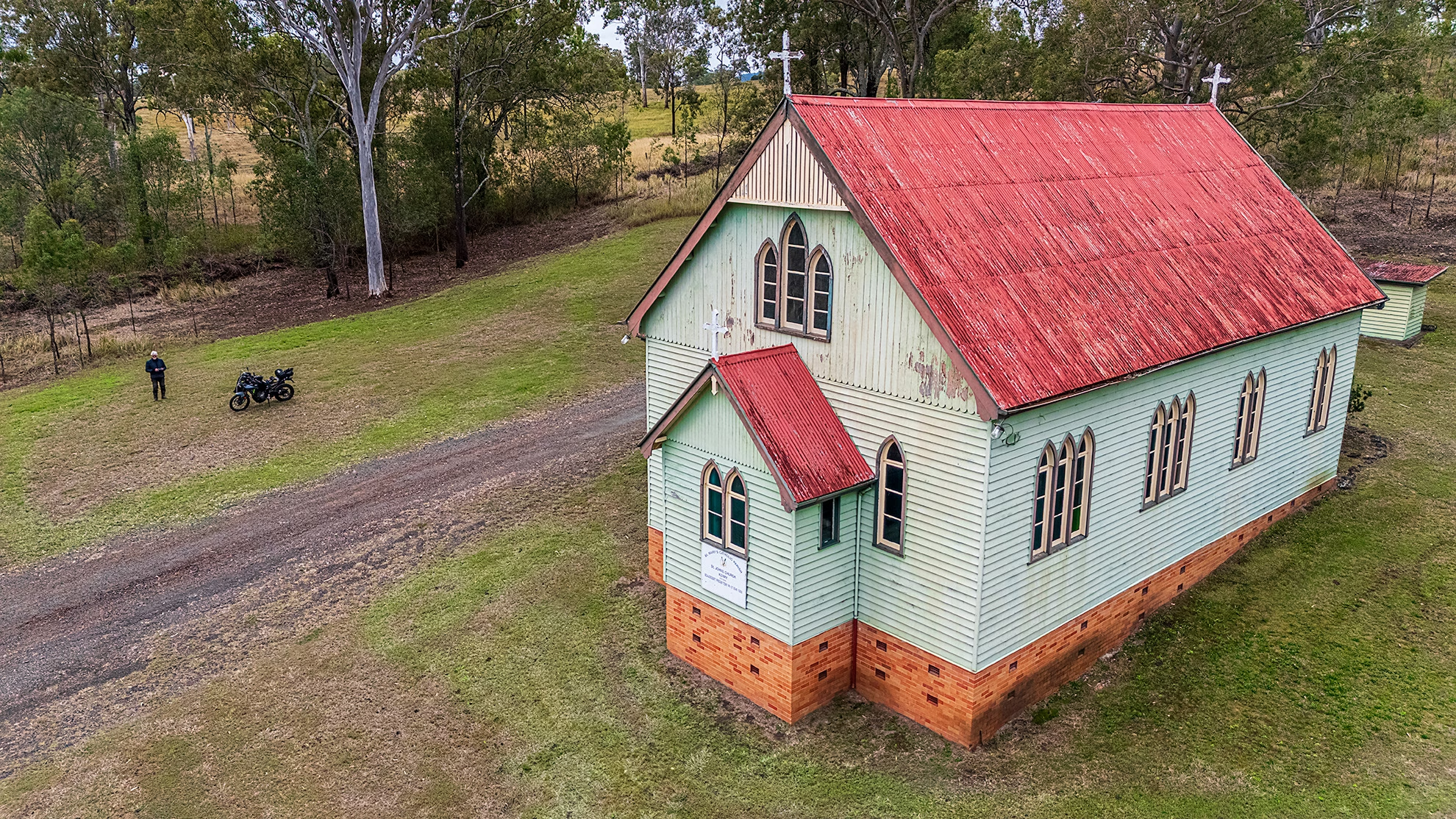
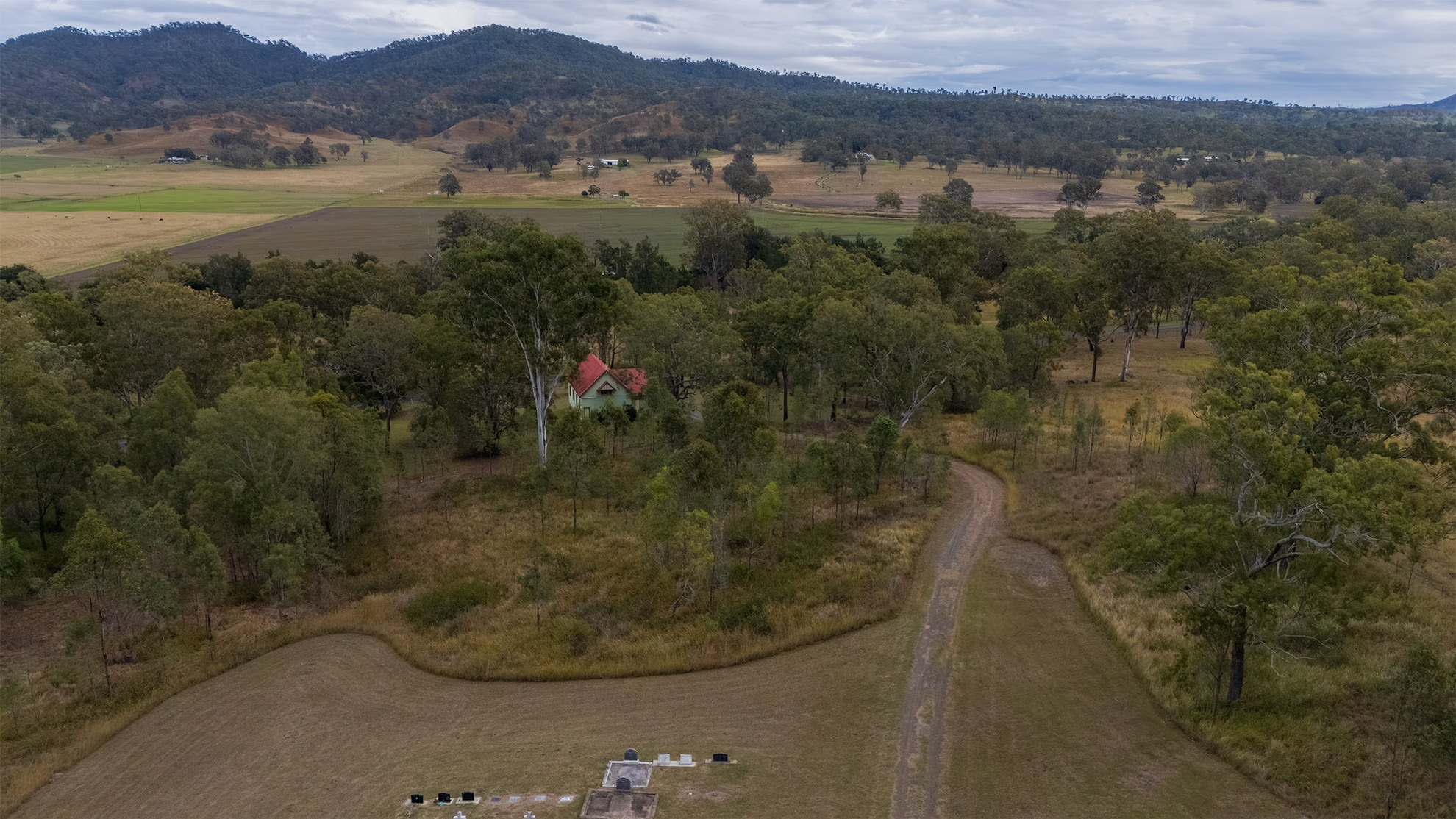
O’Reilly’s Rainforest Retreat is located in the Scenic Rim Region of Queensland, in the heart of Lamington National Park. After another visit recently I was able to locate an interesting cemetery, behind a church that was relocated from Beaudesert 1908. This is the story of Bernard Oreilly and the Stinson crash. In the next Blog I will look at the history of the Retreat, it is also an amazing story.
The story of Bernard O’Reilly and the 1937 Stinson crash is one of Australia’s most powerful real-life survival stories. It combines tragedy, endurance, and the extraordinary bush skills of one man who refused to accept that all hope was lost.
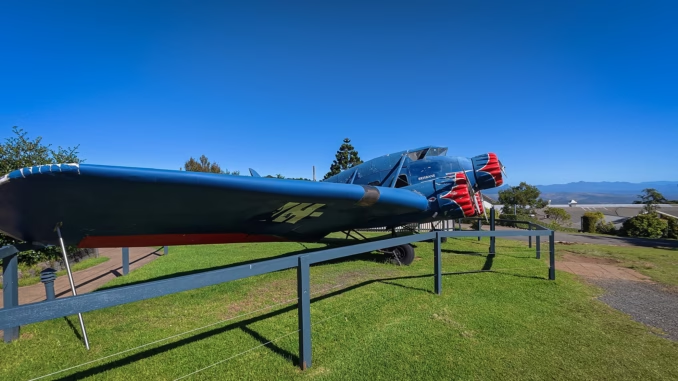
The Disappearance of the Stinson – On 19 February 1937, a Stinson airliner left Brisbane bound for Sydney with seven people on board. It disappeared soon after entering stormy conditions over the mountains of southern Queensland. [en.wikipedia.org]
A massive search followed, but no wreckage was found. Reports placed the plane hundreds of kilometres away, confusing rescuers. As one later account described:
“The search team failed to find it… the whole search centred around northern Sydney.” [abc.net.au]
After days without success, many believed the aircraft had crashed into the sea.
O’Reilly’s Insight and Decision – Bernard O’Reilly, a bushman living near the Lamington Plateau, doubted the official conclusion. Drawing on local reports and his knowledge of the terrain, he believed the plane had crashed in the mountains close to his home. [honesthistory.net.au]
In a later reflection recorded in historical accounts, O’Reilly described his reasoning process: “From what my brother told me I formed the opinion that it was quite possible that the plane never got over our range.” [meanjin.com.au]
With this belief, he set out alone into the dense rainforest to find the wreck.
The Trek Through the Wilderness – The Lamington region is steep, thick rainforest—extremely difficult to navigate. O’Reilly had to rely entirely on bushcraft and intuition. He took nearly two days to reach the crash site, moving through terrain where: “You couldn’t really see more than a few metres around you.” [abc.net.au]
His journey is still regarded as an extraordinary feat of endurance and navigation.
The Discovery of the Crash Site – After days of searching, O’Reilly located the wreckage hidden deep in the McPherson Range.
The scene was devastating – Five people had died in the crash. Three survived initially, but one later died attempting to get help. O’Reilly found two survivors—Joseph Binstead and John Proud alive but severely injured.
According to accounts from the time – “Two men… were still alive among the wreckage and bodies of the other passengers and crew.” [abc.net.au]
The third survivor, Jim Westray, had attempted to walk for help but died in the rugged terrain.
The Rescue Operation – O’Reilly immediately began the rescue effort. He trekked back through the rainforest to gather help, then guided rescue teams to the crash site.
The process was extremely difficult. Contemporary reports describe the terrain and effort involved: “So rough was the going that… [the rescuers] took three hours to cover the first mile.” [slq.qld.gov.au]
O’Reilly carefully coordinated multiple groups: He led doctors to the survivors, guided scrub-cutting teams to create paths and assisted stretcher parties in evacuating the injured [slq.qld.gov.au]
Eventually, after days of effort, the survivors were brought to safety. The impact of the story at the time was enormous. Newspapers recorded O’Reilly’s firsthand retelling of the events. At a public address in 1937, a report noted:
“His graphic, and simply told tale… held his audience enthralled… and [he] received an ovation.” [trove.nla.gov.au]
Despite his heroism, O’Reilly downplayed his role. Later commentary reflects this modesty:
“He did not see himself as a hero.” [abc.net.au]
O’Reilly later wrote about the rescue in his book Green Mountains (1940), which serves as a primary source. In the introduction, he described the experience as:
“A saga of courage and endurance on the part of both rescued and rescuers.”
His account highlights not just his role, but the strength and determination shown by the survivors.
The Stinson crash became a defining story in Australian history for several reasons:
- Heroism and Bushcraft
O’Reilly’s ability to find the wreck when others failed demonstrated the importance of local knowledge.
- Survival Against the Odds
The survivors endured days in a harsh rainforest environment with serious injuries.
- National Impact
O’Reilly became a national figure, celebrated for his courage, though he remained humble
The story has since been retold in books, documentaries, and films, preserving its place in Australian culture.

Great photos!