A brief history of Surat, a rural town in the Maranoa Region, Queensland.
Early Exploration and Naming
The area was first explored by Sir Thomas Mitchell in 1846 during his expedition along the Balonne River. In 1850, Surveyor Burrowes selected a township site and named it Surat, after a town in India where he had previously lived.
Colonial Settlement
Pastoralists began occupying the region in the late 1840s, establishing large sheep and cattle stations. The town became an administrative hub with a Court of Petty Sessions and a hotel by 1859. A school opened in 1874.
Growth and Cobb & Co Era
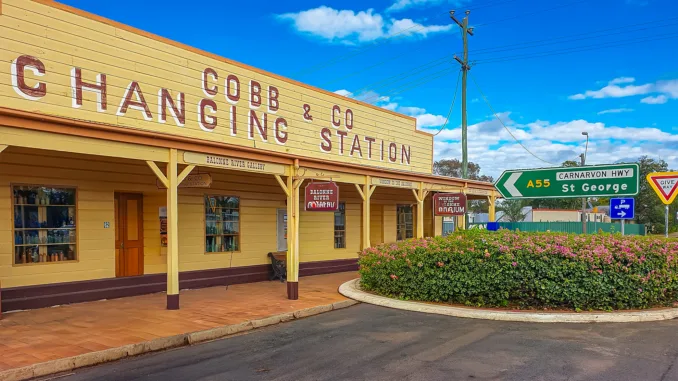
Surat served as a key stop for Cobb & Co coaches, with the last Australian coach run between Surat and Yuleba in 1924.
Despite its early importance, Surat was bypassed by the railway in the late 19th century, which shifted regional prominence to Roma.
20th Century Developments
A hospital opened in 1911, later expanded in 1928 and 1961.
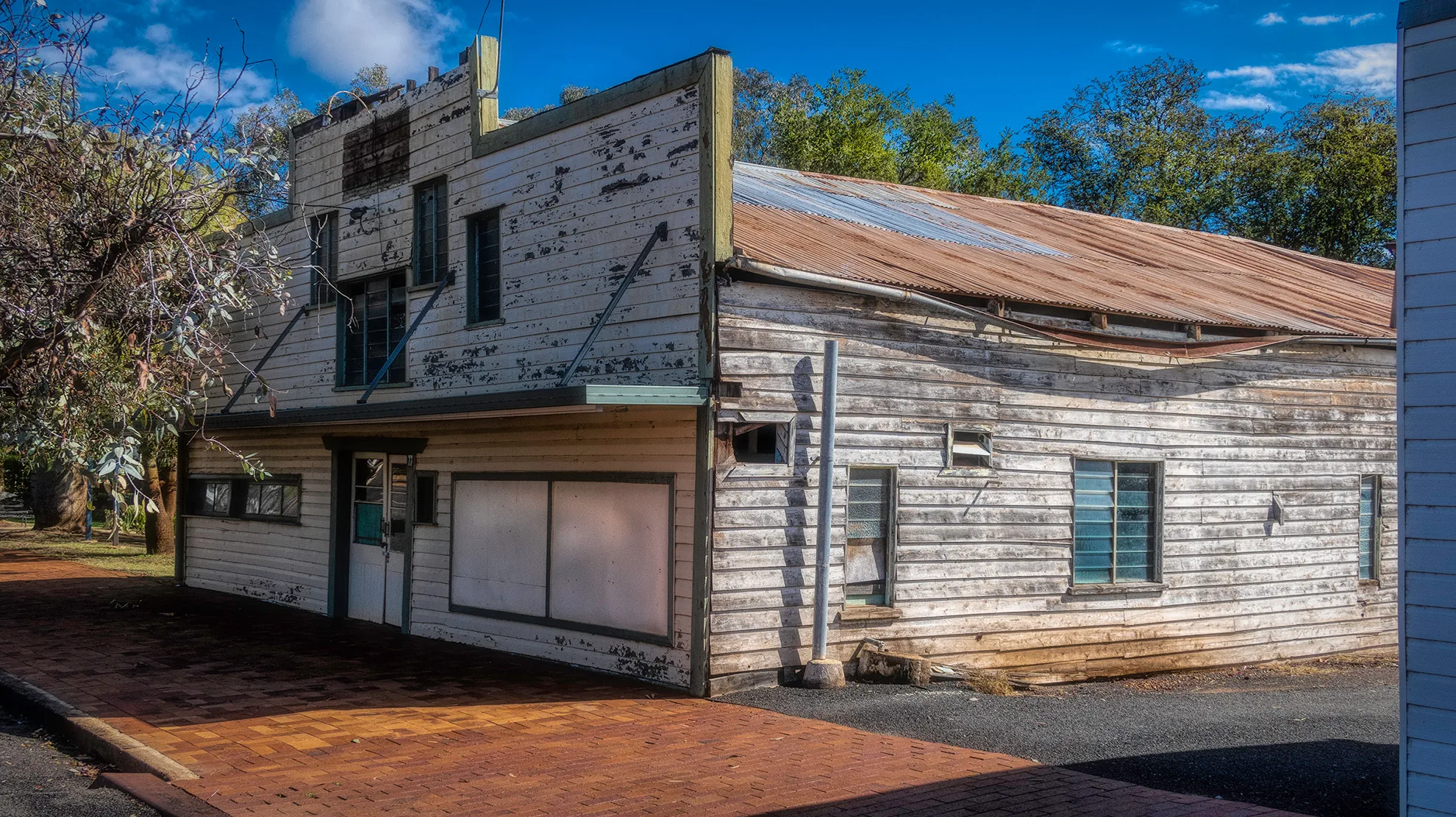
The Astor Theatre, built in 1925, became a cultural landmark.
Reticulated water supply was introduced in 1951, and secondary schooling began in 1964.
Modern Surat
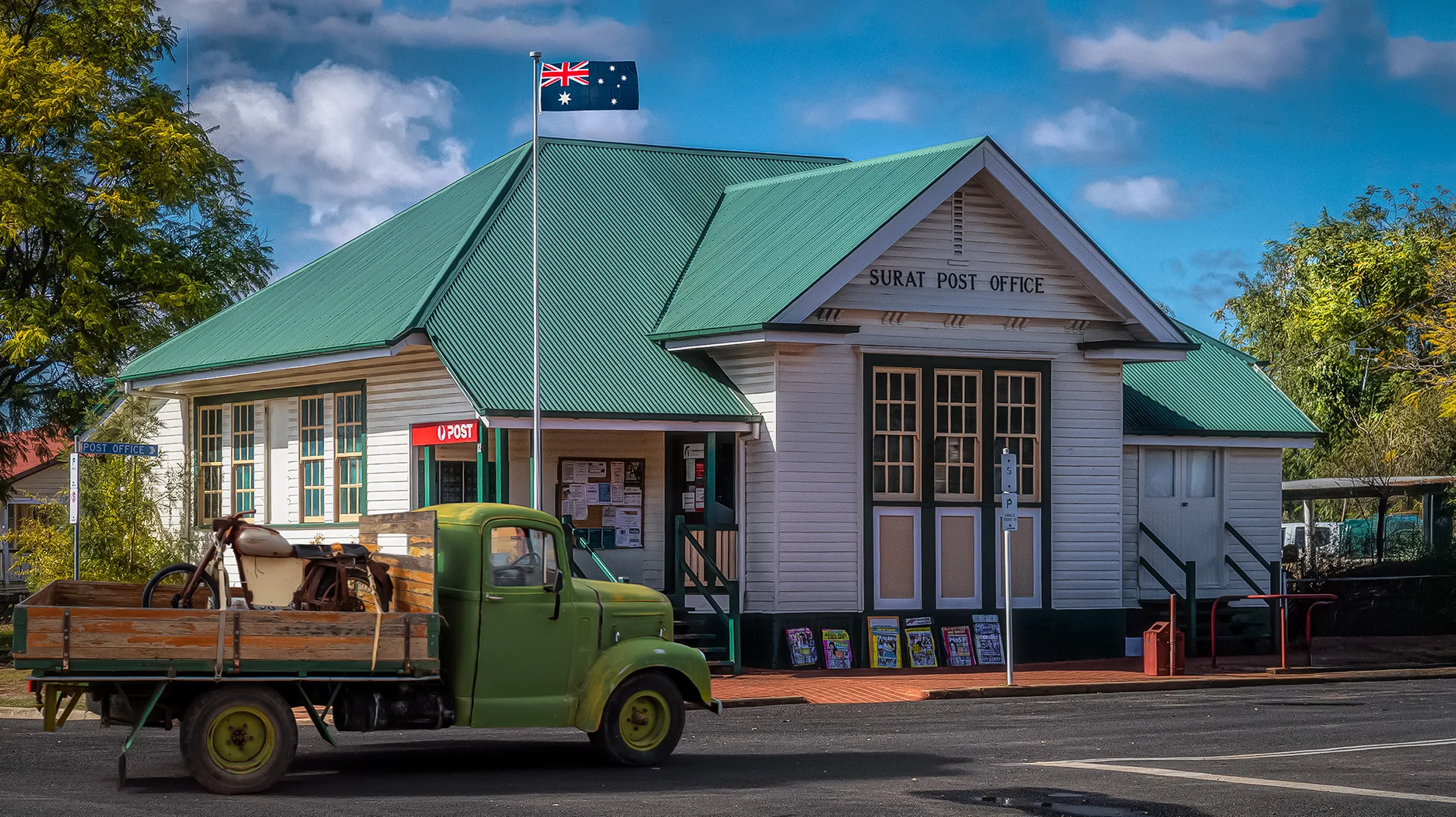
Today, Surat is a small rural town (population about 400) on the Balonne River, known for its heritage attractions like the Cobb & Co Changing Station Museum, riverside parklands, and strong links to pastoral history.

Be the first to comment