Murwillumbah, often affectionately abbreviated to “M’bah,” is a town nestled in the Northern Rivers region of New South Wales, Australia, within the Tweed Shire. Situated at the southeastern foothills of the McPherson Range, within the volcanic caldera of the ancient Tweed Volcano, the town lies along the Tweed River, close to the Queensland border, approximately 848 km northeast of Sydney and 132 km south of Brisbane.
European timber-getters first entered the region in the 1840s, drawn by its rich sub-tropical rainforest. The nearby river port of Tumbulgum initially served as the focal settlement, but Murwillumbah’s strategic importance led to its designation as a local government municipality in 1902.
The town’s early decades were challenged by disasters. A devastating fire in 1907 destroyed much of the business district, and significant floods followed in 1947, 1954, and 1956. Despite these setbacks, the extension of the railway from Lismore in 1894 spurred economic growth, facilitating agriculture, particularly sugar cane, bananas, and dairy farming, as well as servicing the bustling Pacific Highway.
Post-war, Murwillumbah continued to flourish as a service hub. The annual Tweed Banana Festival, introduced in the 1950s, became one of Australia’s longest-running regional celebrations. The town also gained notoriety in 1978 as the site of Australia’s largest bank robbery, when A$1.7 million was stolen from the Bank of New South Wales, an event that remains unsolved.
By 2002, the Pacific Highway bypassed the town, reinforcing its local charm and reduced traffic. While the railway ceased in 2004, its legacy continues through the Northern Rivers Rail Trail. Agriculture remains vital, sugar cane, dairy, coffee, bananas, and other tropical produce drive the local economy.
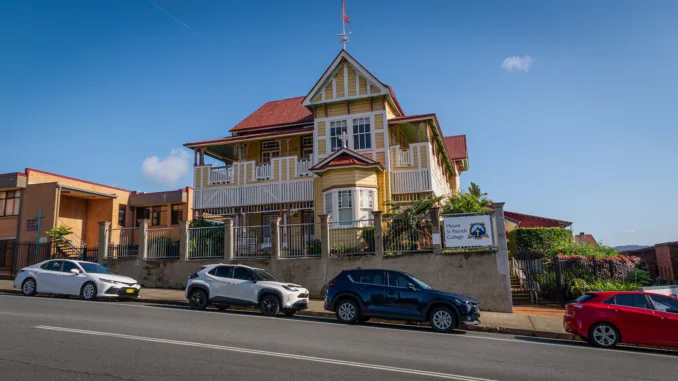
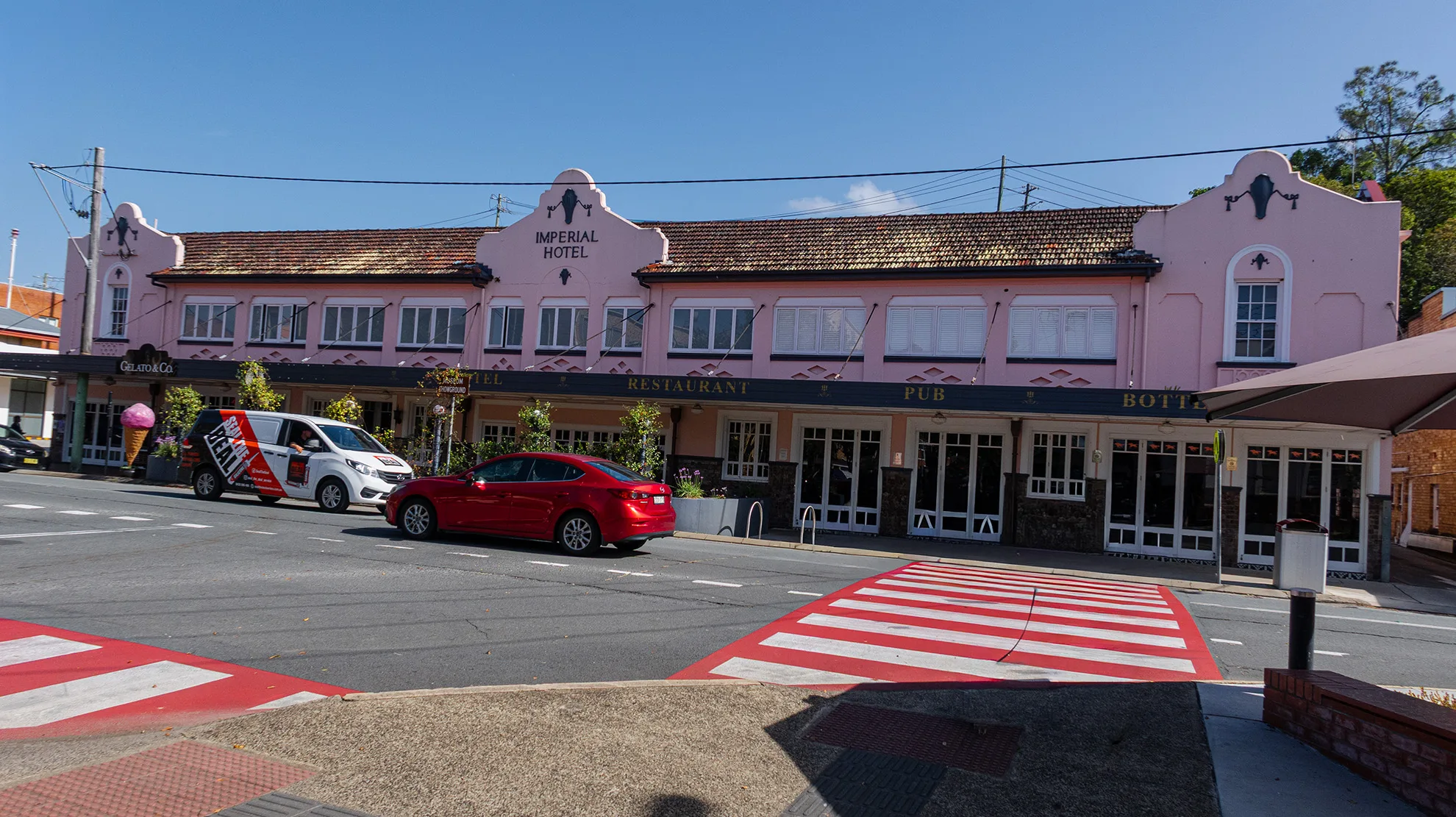
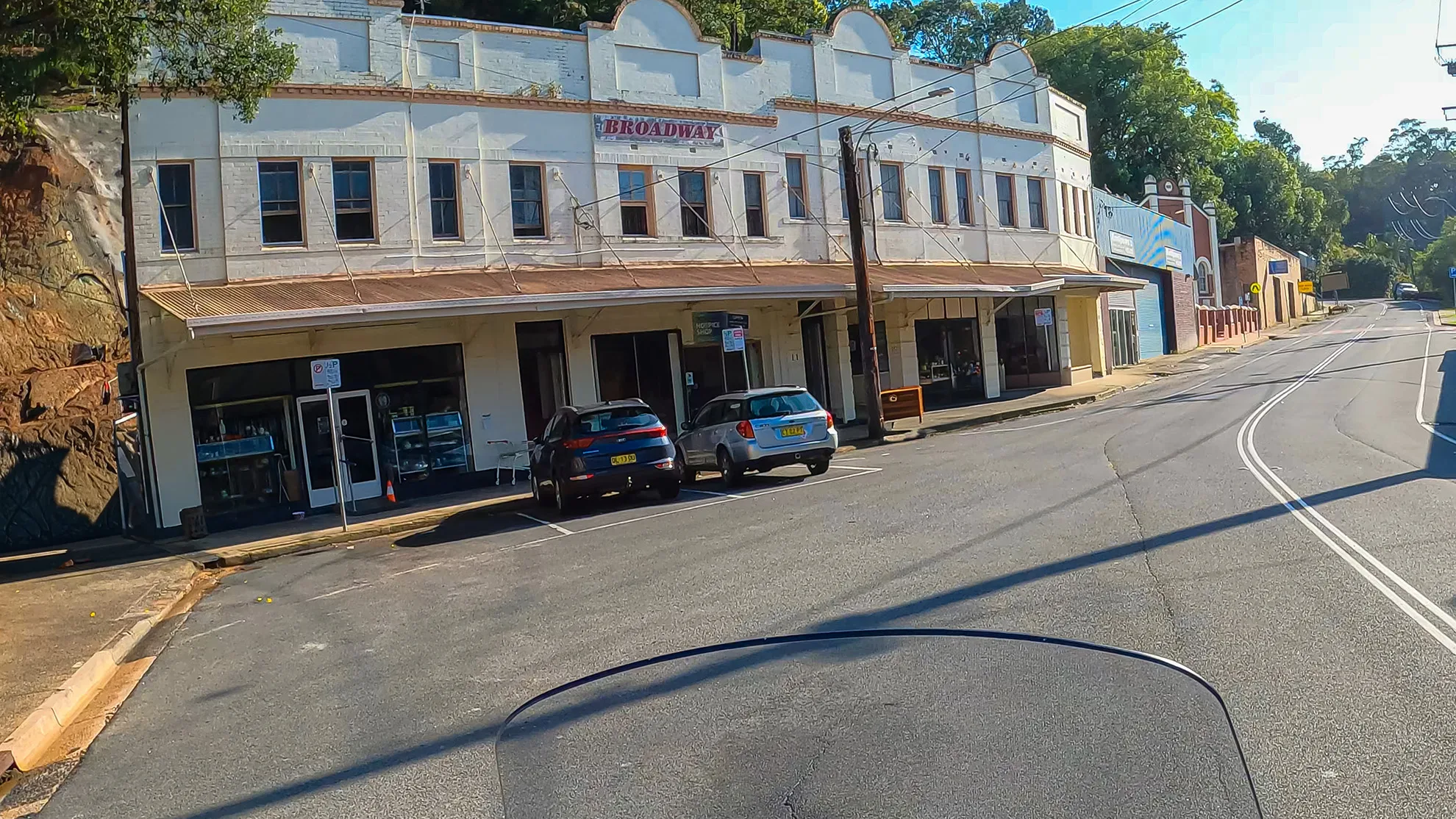
Today, Murwillumbah blends historic Art Deco architecture with cultural vibrancy, offering a heritage-rich, lushly scenic gateway to the Tweed hinterland.
YouTube Short https://youtube.com/shorts/Ey4BcojnCxU
The Importance of Rail in the Development of the Town
- Economic Growth:
When the railway line from Lismore reached Murwillumbah in 1894, it opened up efficient transport for agricultural products, especially sugar cane, bananas, and dairy. Farmers could send goods to markets in Brisbane and Sydney much faster than by river or road, which boosted profitability and encouraged expansion of farming. - Population and Urban Development:
The railway made Murwillumbah a regional hub. Businesses clustered near the station, and the town grew rapidly in the early 20th century. It also attracted workers and their families, increasing demand for housing, schools, and services. - Decline of River Transport:
Before the railway, the Tweed River was the main transport route. The railway reduced reliance on riverboats, shifting trade and travel patterns inland and consolidating Murwillumbah’s role as the commercial center. - Cultural and Social Connectivity:
Rail travel connected Murwillumbah to other Northern Rivers towns and to Brisbane, making it easier for residents to access goods, education, and cultural events. It also brought tourism, as visitors could explore the Tweed hinterland more easily. - Long-Term Legacy:
Although the line closed in 2004, its historical role shaped the town’s identity. Today, the former rail corridor is being repurposed as the Northern Rivers Rail Trail, preserving its heritage while promoting recreation and tourism.
Murwillumbah Railway Timeline
1894 – Railway line from Lismore officially opens to Murwillumbah, connecting the Tweed Valley to the broader Northern Rivers network.
1904 – Extension completed to Tweed Heads, enhancing coastal access and trade.
1920s–1930s – Railway becomes the backbone for transporting sugar cane, bananas, and dairy products to Brisbane and Sydney markets.
1961 – Passenger services between Murwillumbah and Sydney introduced, boosting tourism and regional connectivity.
1970s – Decline in passenger numbers begins as road transport becomes dominant.
1990s – Freight services reduce significantly; line primarily serves local agriculture.
2004 – Murwillumbah railway line officially closes after 110 years of operation.
2020s – Northern Rivers Rail Trail project begins, repurposing the historic corridor for cycling and walking.

Be the first to comment